
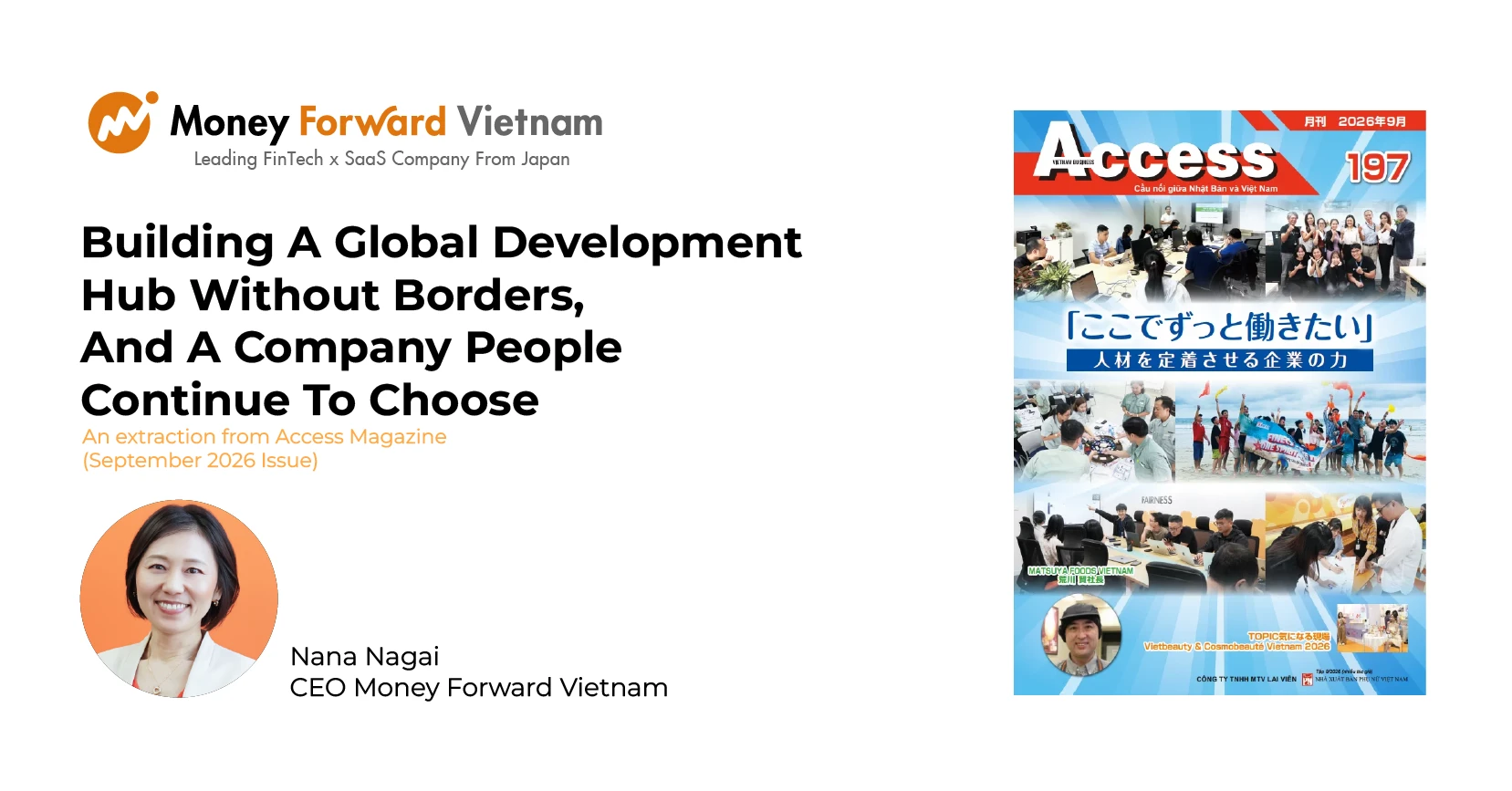



Building a Global Development Hub Without Borders, and a Company People Continue to Choose

An extraction of Special Feature: "I want to work here forever" - The Power of Companies That Retain Talent.” From Access Magazine (September 2026 Issue)
JP version: link
What Makes People Say, “I Want to Keep Working Here”
Why do talented people leave after a company has invested so much in their growth? Money Forward Vietnam CEO Nana Nagai shares how the company has built an organization where people want to stay, and what it takes to remain a workplace of choice.
Growth Opportunities Matter More Than Popular Perks
Money Forward provides fintech and cloud-based SaaS solutions for both individuals and businesses. Its main products help companies streamline back-office operations such as accounting, HR, and legal affairs. The company currently has approximately 500,000 paying corporate customers.
Money Forward Vietnam, or MFV, was established in Ho Chi Minh City in 2018 as the Group’s first overseas development hub. Together with Money Forward India, established in 2025, MFV supports product development and continuous improvement across the Money Forward Group.
Following the opening of its Hanoi office in 2022, MFV has grown to several hundred employees. While employee retention is naturally an important priority, Nagai emphasizes that popular perks are not the main reason people choose to stay.
“We hold company trips, family events, and long-service award ceremonies, but we don’t view these as major retention strategies.”
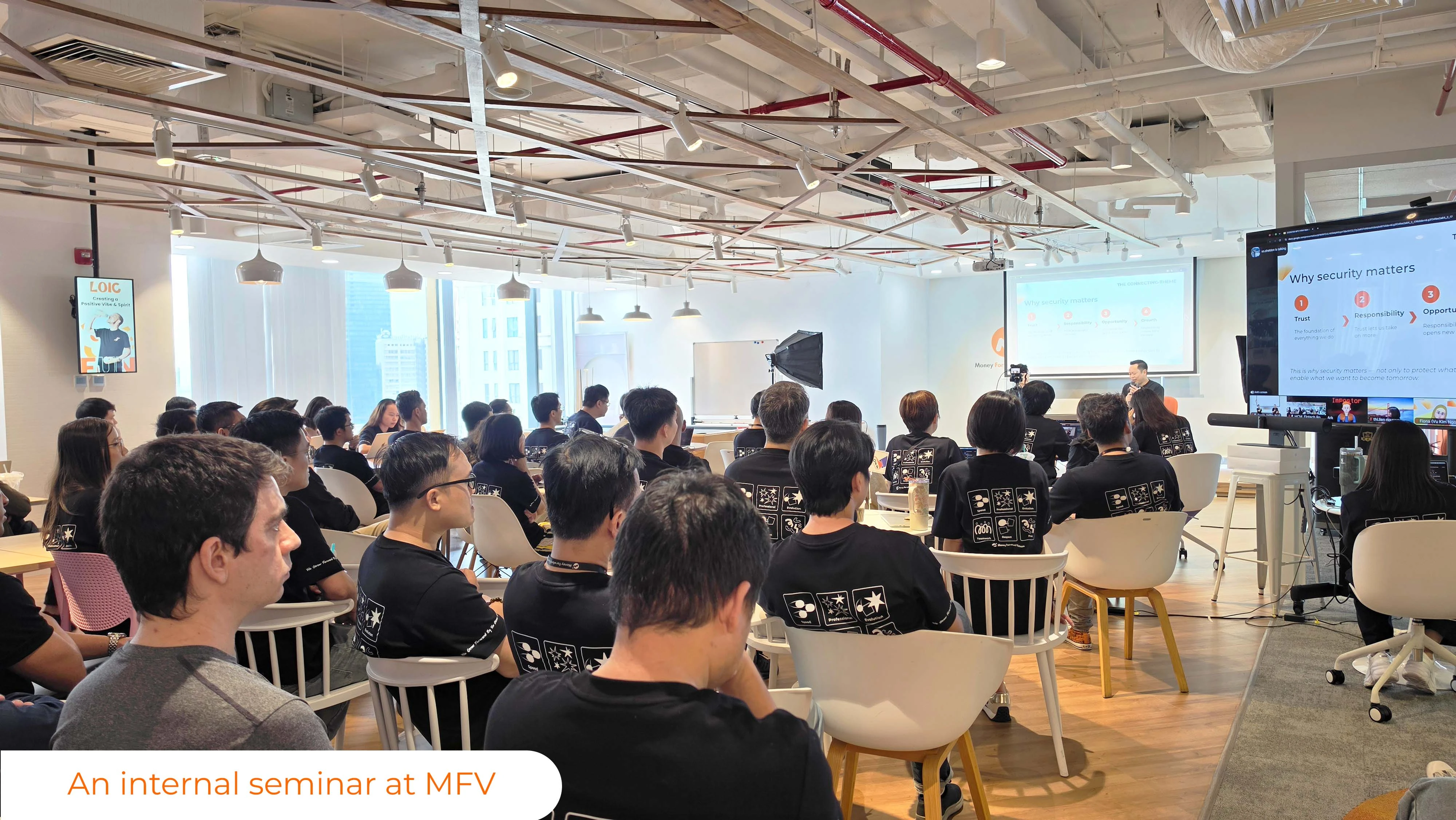
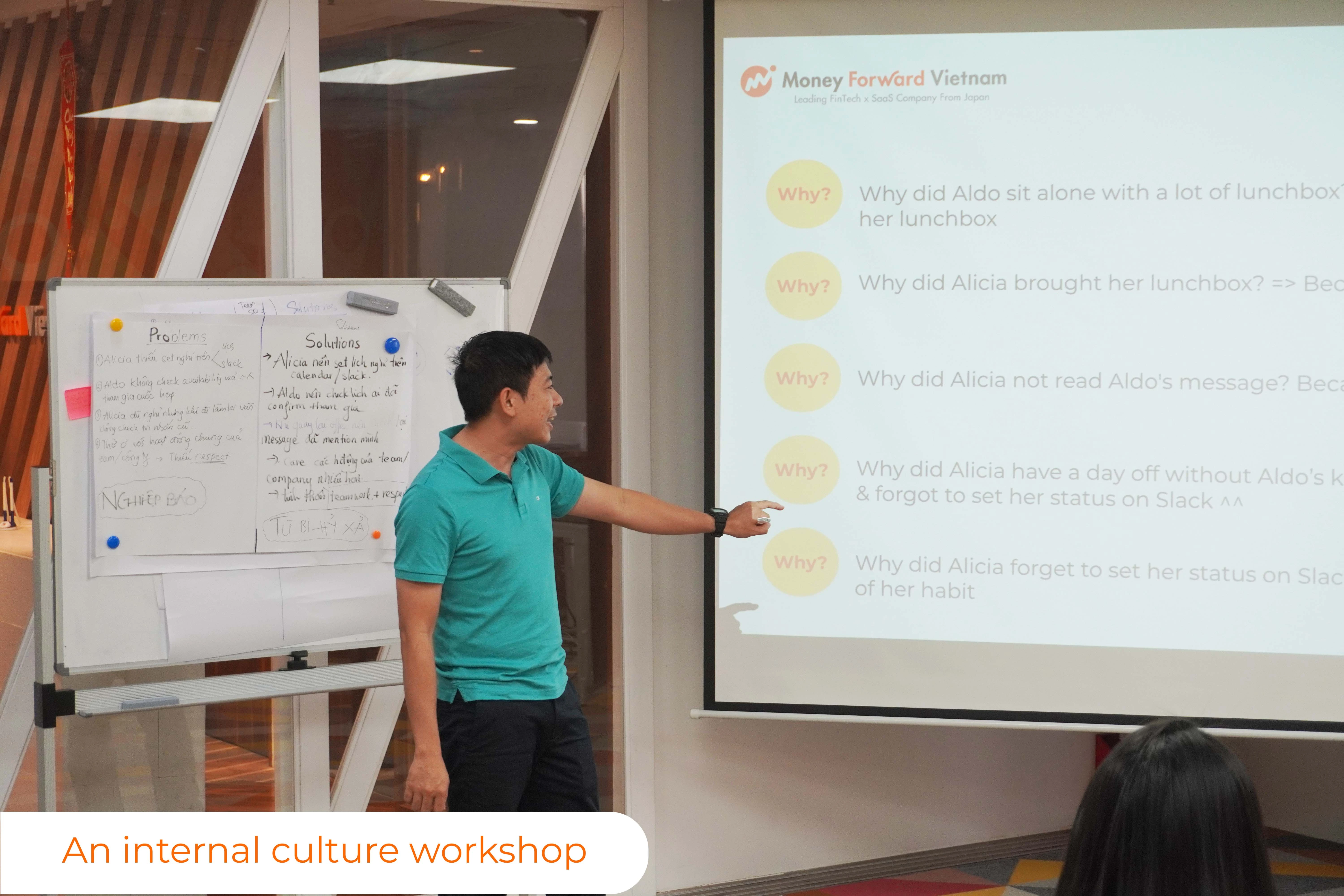
MFV offers several multi-layered learning and development programs to support employees’ continuous growth. One example is an offline training program led by external instructors and management-class employees. Topics range from leadership and company principles to intercultural communication and team building.

MFV also provides a wide range of online learning opportunities through external platforms, covering areas such as internal auditing, security, compliance, and intellectual property. Offline sessions are typically one to two hours long.
“Some programs are limited to specific roles or responsibilities. At the same time, because we value proactive participation, we sometimes open applications so that employees can put themselves forward for opportunities.”
A critical-thinking course developed in Japan attracted applications from approximately one in four MFV employees. The company ultimately selected around one in ten applicants to participate.
The selection criteria went beyond what applicants had already learned. MFV looked for people who could absorb the knowledge, make it their own, and then give back by becoming trainers for other colleagues.
Breaking Down Invisible Barriers and Evaluating People on Merit
One mindset that can emerge when working across borders is the assumption that Japan is “upstream,” while Vietnam is “downstream” or simply an outsourcing destination. Having personally led the establishment of MFV, Nagai says the organization has worked continuously to eliminate such hierarchical perceptions.

“Putting labels or boundaries around countries and locations makes it easier to divide work. But when we think about the organization as a whole over the long term, what truly matters is whether talented people can thrive. At MFV, nationality and location do not determine how people are evaluated. Being recognized fairly for one’s capabilities also creates lasting motivation.”
Nagai acknowledges that even everyday practices regarded as fair in Japan can appear different when viewed from a minority perspective.
“For example, imagine a meeting with eight participants from Japan and only two from Vietnam. The conversation may naturally shift into Japanese, and discussions may proceed based on assumptions that are familiar only to the Japanese participants. We identified and improved these issues one by one.”
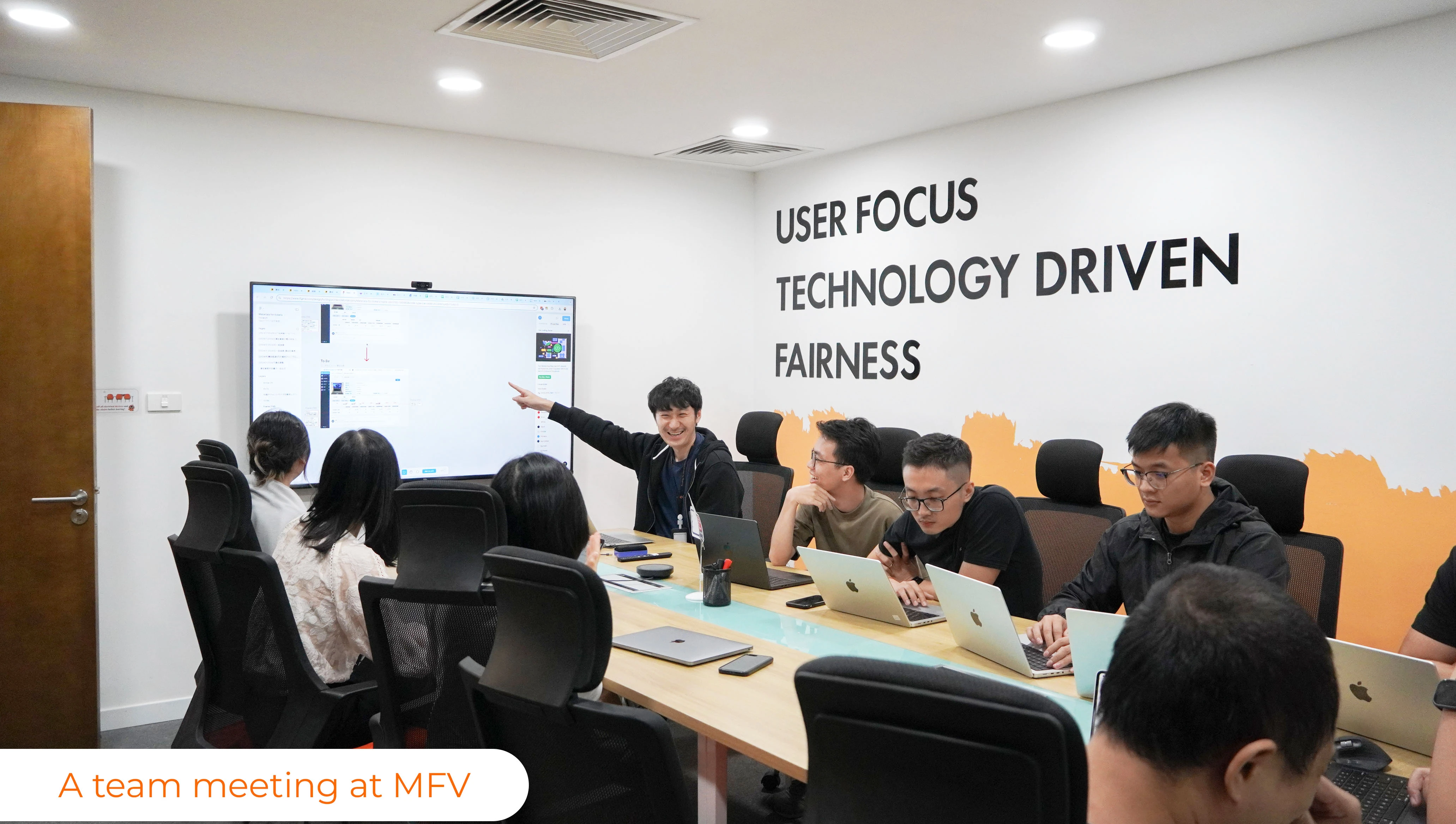
Using English as the common language among engineers has made it easier for employees to contribute to discussions regardless of where they are based. At the same time, simply translating Japanese-language documents is not enough: important context can still be lost.
MFV therefore reviews the broader principles behind Japanese practices and reorganizes the information so that the original purpose and reasoning are clear. This has helped employees from different countries develop a deeper understanding of one another.

“Over the past several years, this commitment to removing barriers and creating a truly flat organization has taken root across the Money Forward Group. The idea that talented people can succeed regardless of where they are based has become firmly embedded in our culture.”
MFV’s training systems were initially developed independently in Vietnam. Today, however, customized versions of Japan-based training programs are also being introduced. The organization continues to evolve beyond conventional boundaries.
Employee turnover has also fallen to approximately half the level it was five years ago.
“We don’t pay excessive attention to overall industry turnover rates. However, when someone we have invested in developing chooses to leave, we naturally feel the loss.”
Toward Talent That Stays Chosen in the AI Era , Management That Moves People Forward
Today, many Money Forward products developed and operated by MFV are led by Vietnamese managers who oversee Japanese team members or manage large-scale projects.

The number of employees seconded from Japan remains at approximately 50 to 100, with director-level employees visiting MFV around four times a year. According to Nagai, bringing leaders together in the same location has deepened communication and mutual understanding while increasing the speed of decision-making and noticeably improving product quality.
MFV’s involvement goes far beyond individual Money Forward products, and that is another source of its appeal. Since its founding, MFV has been deeply involved in the evolution and growth of the entire Money Forward Group.
“I believe there are far greater opportunities here, by continuing to take on new challenges, than there are in moving from one company to another.”
The next priority is enabling people to thrive alongside AI, which is transforming the IT industry. AI tools have already been introduced across the Money Forward Group, and Money Forward Vietnam has presented the Hero Award to employees who demonstrate exceptional AI practices.
The company is also progressively integrating AI features into the products it develops.
“The value of engineers who are valued only for writing code will inevitably diminish. What will become even more important is the ability to evaluate AI-generated outputs appropriately, make sound decisions, and meet global standards for reliability.”

This is not merely part of the company’s future strategy. It is also essential to creating an environment where highly capable engineers can continue to grow without choosing to leave.
“If the Money Forward Group grows, that growth will create positive opportunities for MFV as well. This is the organization we are working to build. We will continue to lead with a management approach that moves both people and Money Forward forward.”


MIDDLE MANAGEMENT CAMP 2H2023: Gắn Kết Để Phát Triển